
24-08-2024
Compressor vs. Pump: Understanding the Key Differences
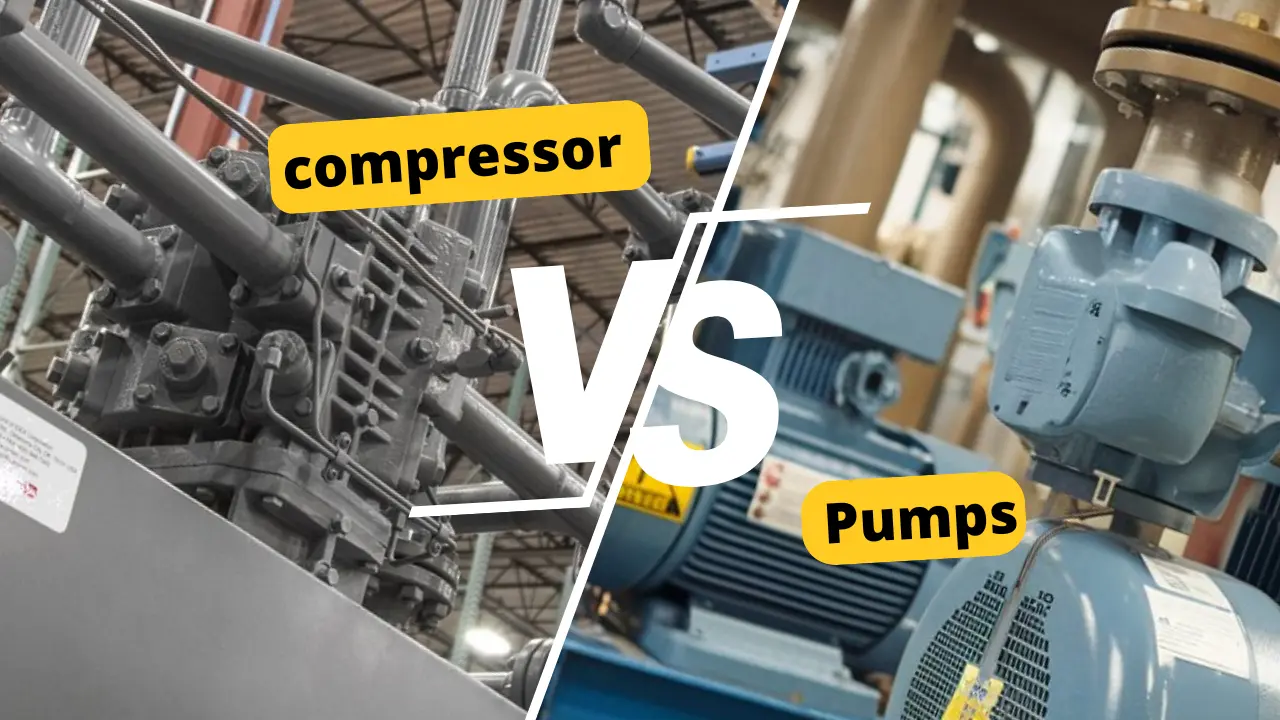
Compressors and pumps, both are used from time to time when fluids are transported from one place to another. These two systems are an important part of the transport system for fluids. While both are used for the transmission of fluid, there are some major differences between them. For example, a pump works on mechanical energy that then converts to fluid energy. On the other hand, a compressor converts mechanical energy into kinetic energy to compress air. The two machines have different operating methods but work towards a common goal. While these two are different, the common goal is to increase the pressure in a system.
What is a pump?
A pump is a very basic engineering device that is crafted on the principles of fluid mechanics.
Pumps work by creating a pressure differential that causes the fluid to flow through the pump and into a desired location. A pump may be used in a water delivery system or even on an industrial scale. Pumps are also used in HVAC systems and air conditioners. Large-scale fluid pumps are also used in chemical and petroleum plants as well as other manufacturing industries. Pumps are usually used to transport incompressible fluids. This could be for fluids of different temperatures, density and other characteristics.
What is a compressor?
A compressor is a mechanical device that compresses gas or any compressible fluids and minimizes its volume. This increases the gas pressure and reduces the volume within its chamber. Most compressors work with gases because gases are much more open to compression because of the weak chemical bonds between them and their nature.
Differences between pumps and compressors
There are some major differences between the two systems of compressors and pumps. The working principle, the ways of operation, and even the core design for the two devices are different. Here are some differences between the two important devices that are used across industries.
Design differences
There are basic structural differences that exist between the pump and the compressor. The pump is a completely different design than the compressor. The design depends on the principles of operation, the fluids that are carried with their system, and the overall deployment in an industry. For example, industrial-level compressors have a storage tank In them that stores the fluid or gas. The compressor also has an intake filter and a drain. The safety and structural integrity of the compressor depend on the valves. The most crucial part of the compressor is the motor engine, which provides the parts with energy to carry out the process of compressing gas.
On the other hand, a pump at the basic level has a much simpler design than a compressor. The industrial pump is a device that has a motor, an impeller, a shaft and other parts that together work to pump fluid or gas. Industrial-level pumps can be smaller and less complicated than industrial compressors. Moreover, because of the complex structural design, a compressor has more vibrational energy during operations.
Differences in operations
The operational framework of a compressor is very different from that of a pump. Pumps can be used to take fluids from one place to another. Pumps are used to operate on fluids and gases and take them from one point to the other. However, compressors usually just work with gases and their operating principle is to put a lot of pressure on the gas and compress it.
The pumping action happens away from the compressor and in a different unit. Pumps are more versatile in the way they operate as these can work on both gases and liquids. However, compressors are often limited because of the media they work on, although their applications are diverse. The compressors and pumps might be part of the same gadget, but they have different purposes.
Media
The media that a pump can push out is a pivotal part of its working. Moreover, the medium on which a compressor acts is different from that of a pump. For example, a pump mostly works with fluids that are resistant to compression. For example, most production units use pumps to transport water, oil, and other liquids. Even at home, pumps are used in water delivery systems that bring water to the taps. Pumps cannot compress a liquid more than its natural pressure. Secondly, pumps can also work with gases or mixed media, which have a mixture of gases and liquids. This is not possible for compressors.
On the other hand, compressors mostly work on compressible substances which are gases. The molecules of gas have a lot of random movement and more entropy. This is because the intermolecular spaces are large between the two molecules of a gas. Because of the minimal bonding between the molecules of gas, the gases are easily compressible. Therefore, it is easier for a compressor to work with gas. A compressor can put extra pressure on a gas and reduce the volume of the gases in the compression chamber. This in turn increases the pressure of the gas.
Applications
The application of a pump system is different from a compressor. A compressor is used in air conditioning and refrigeration industries, manufacturing industries, packaging, oil and gas, petrochemical industries, power generation stations.
For example, in an air conditioner, a compressor compresses the refrigerant vapour. The compression of the vapour increases the pressure of the gas and makes it hot. The ambient gas is then drawn through the condensing coil to make the air cooler than the surrounding.
The air then leaves as hot air from the back outlet of the air conditioner. Refrigerants also use compressors to cool the surroundings and create a very cold system around food items. Compressors are used in refineries and gas processing plants. Compressors are also used to package drinks in breweries.
Pumps are used in different industries, such as mining and agriculture. For example, in the agricultural sector, pumps are used for irrigation. Pumps are also used in air conditioners and cooling systems. Both compressors and pumps are used in production and processing units at strategic points.
Conclusion
Compressors and pumps are integral components in a wide range of modern devices and industrial workflows. From small plants to large-scale industrial operations, these systems play a crucial role across various sectors, including Oil & Gas, transportation, metallurgy, marine, aviation, construction, and more. While compressors and pumps differ in design and operating principles, they share the common goal of increasing the pressure of fluids or gases to facilitate their transport from one point to another.
At AYTC, we specialize in both pumps and compressors, offering tailored solutions for diverse applications. If you need expert advice or a site inspection to determine the best equipment for your specific needs, please don’t hesitate to contact us. We’re here to help you make the right choice for your application.
Leave a Reply
Your email address will not be published. Required fields are marked *